figurative - poetic | storied objects
Fashion editorial

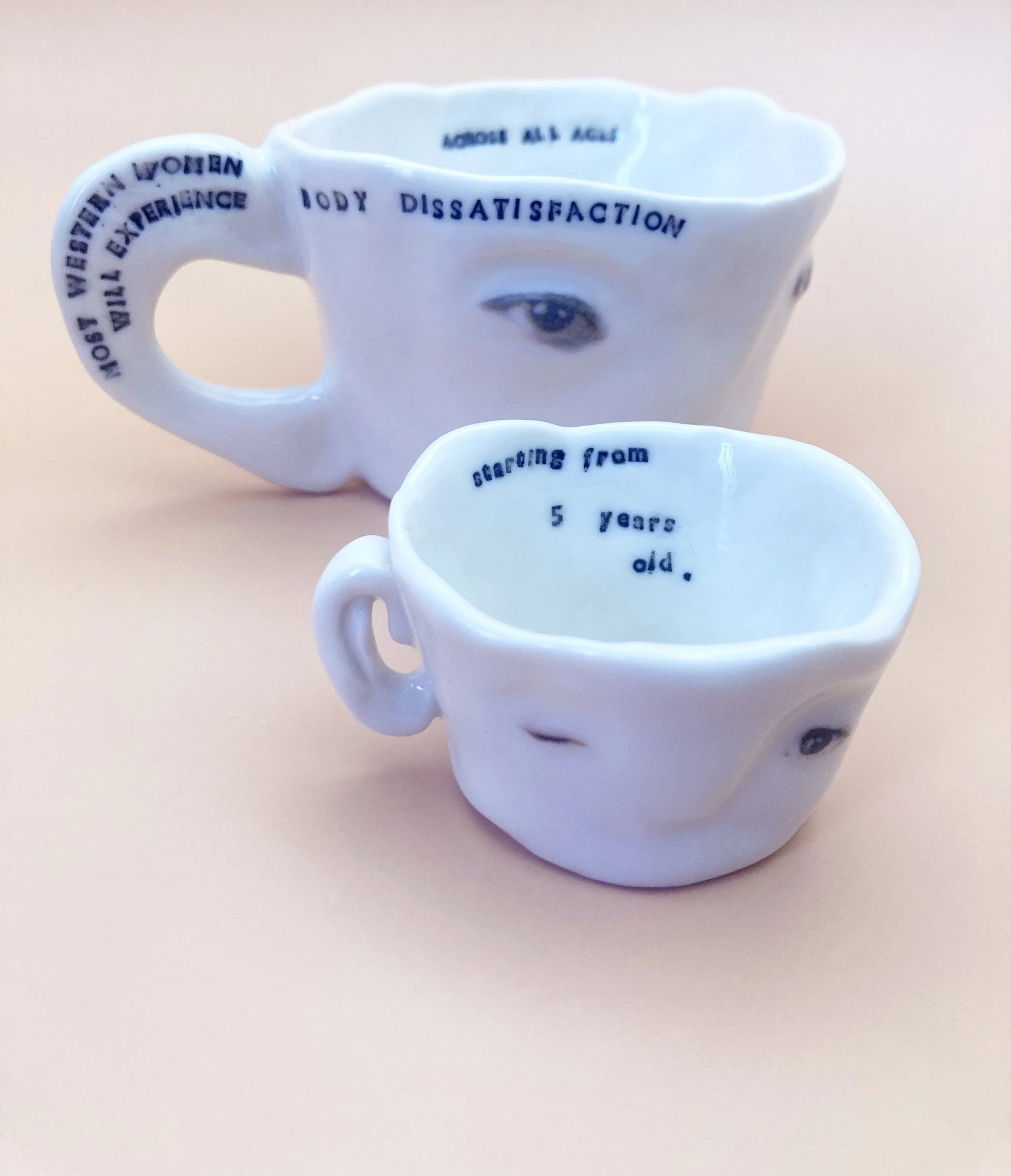
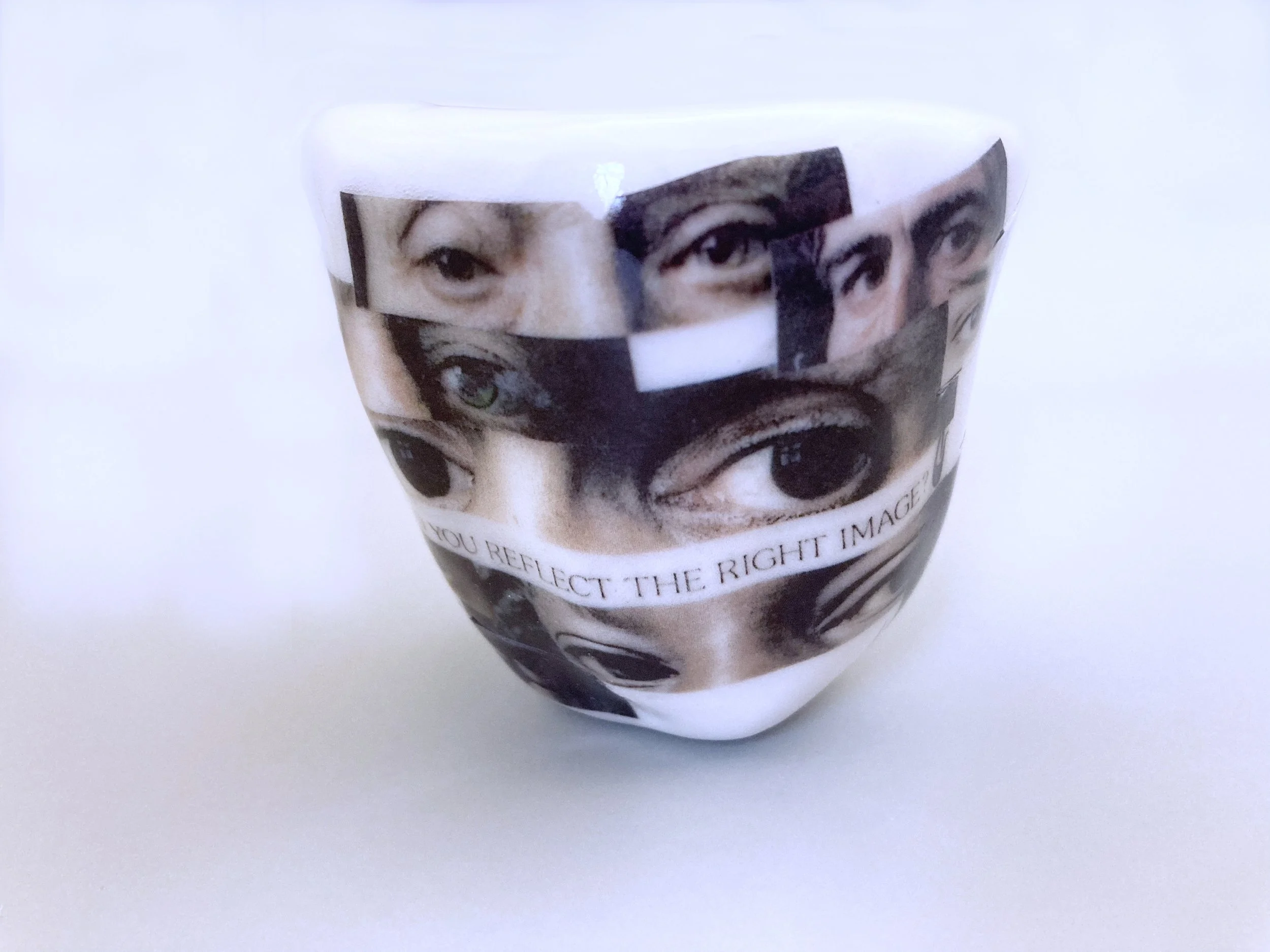
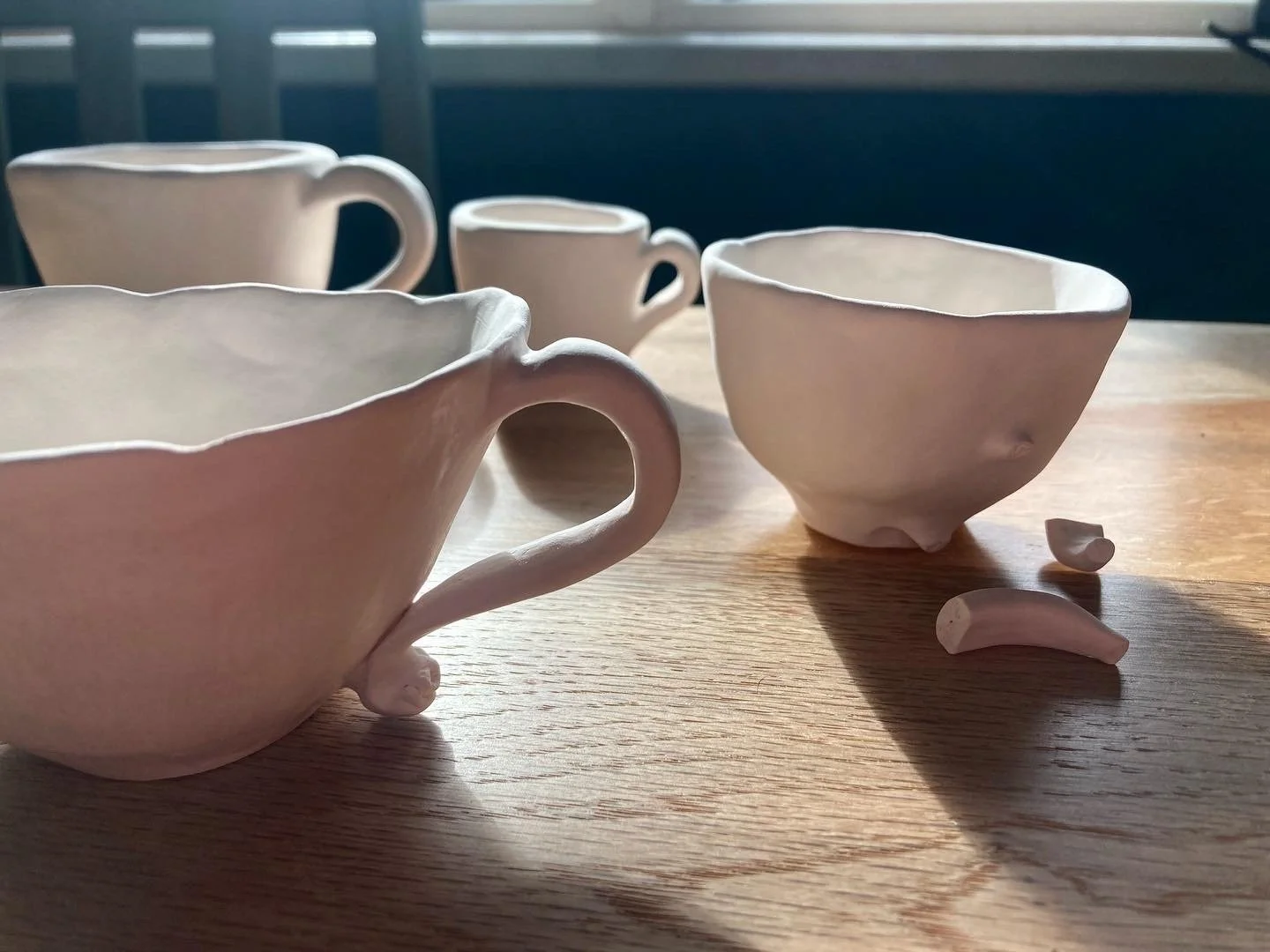
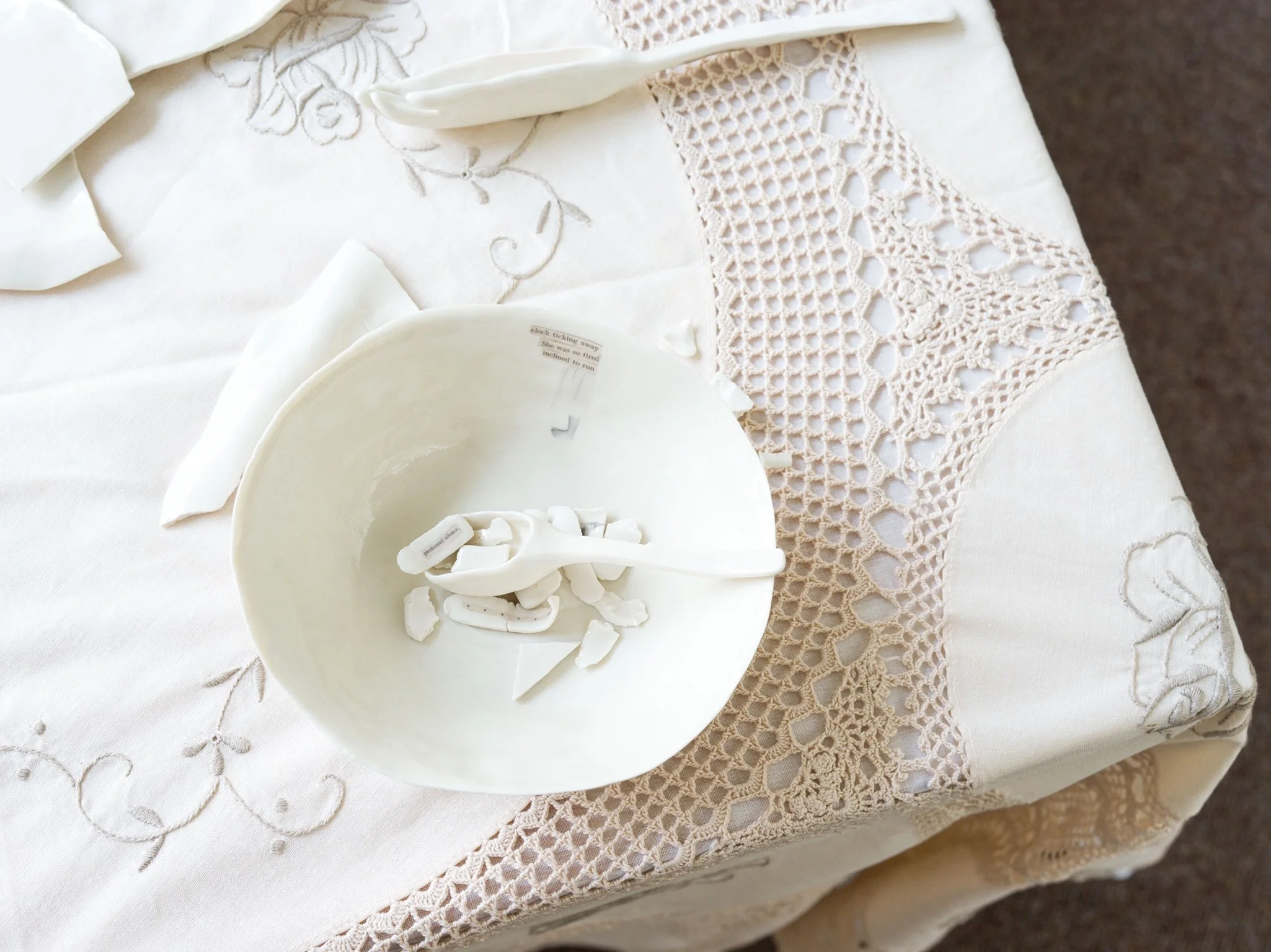
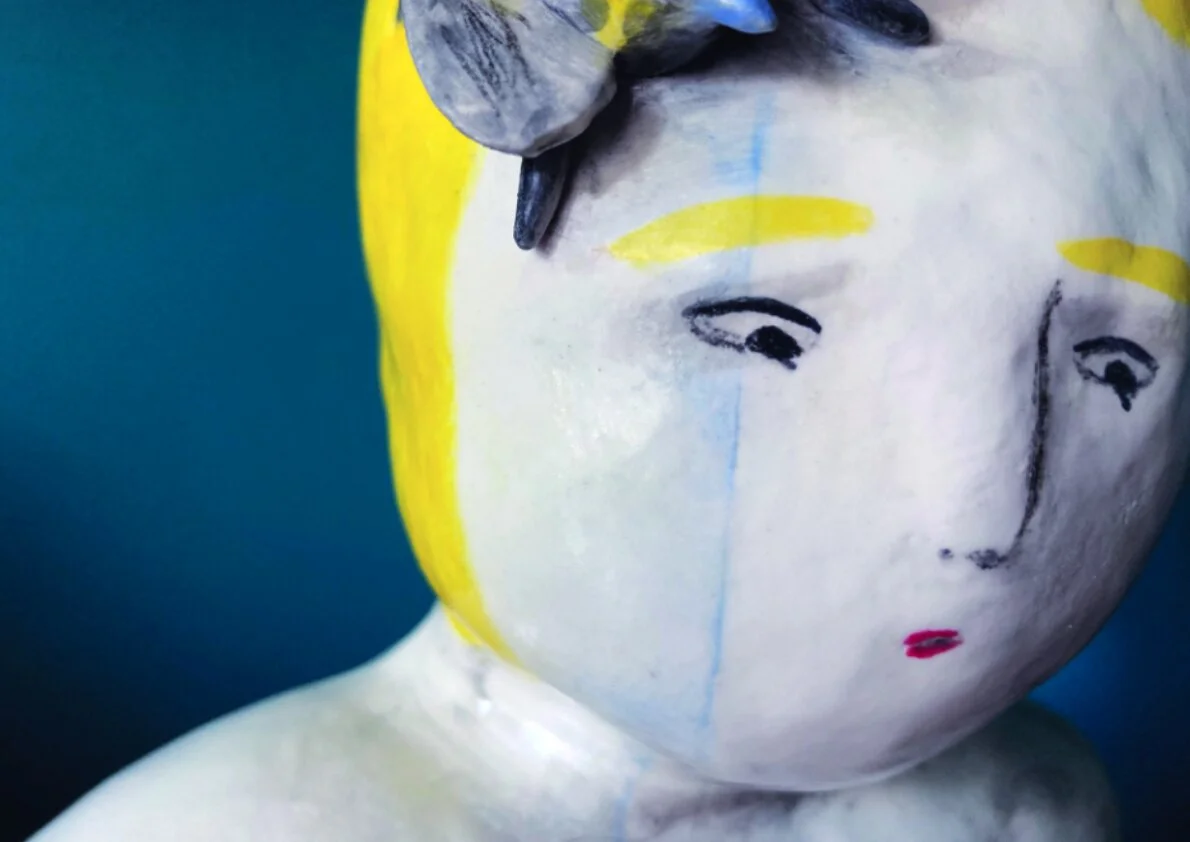
This practice-based research makes original contributions to knowledge in illustration terminology and practice, and arts-based research through two related practices: an autoethnographic object illustration practice, made from ceramic, and an illustration-based workshop practice involving these objects. The autoethnography explores my (White) experience of body image and bulimia within a broader cultural context, drawing predominantly on psychology, sociology, and feminist scholarship. The practice is contextualised within the field of illustration and looks to (narrative-based) ceramics theory and practice, further connecting the disciplines. The autoethnographic objects are made in two forms, one of which I define as liminal object illustration.
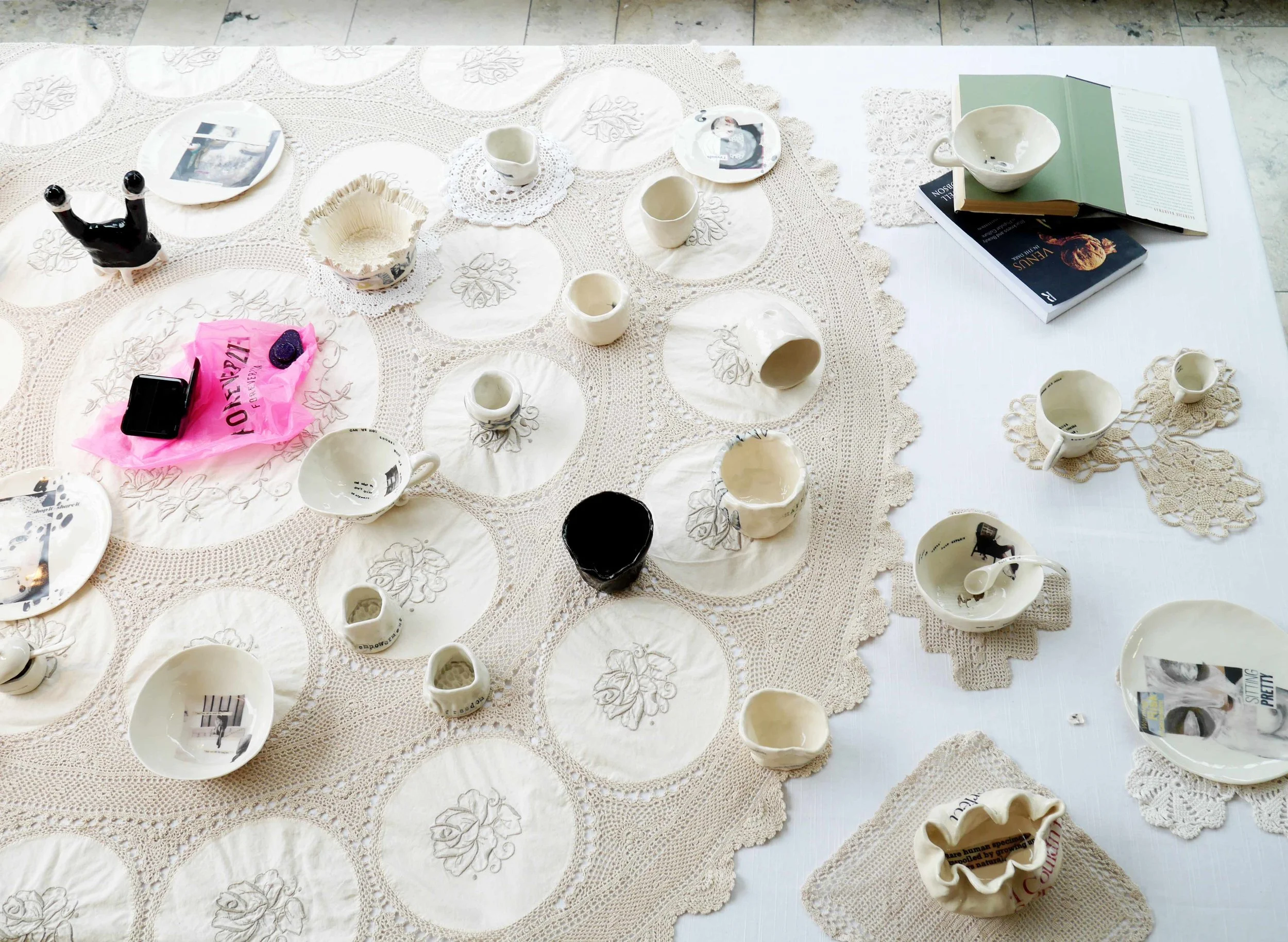
I designed Storied Objects workshops to engage groups of women in critical discussion and making at the table, laid with the autoethnographic objects. As the liminal object illustrations mimic tableware, their uncanny quality—rooted in social and cultural understandings—helps materialise a threshold at the table, enabling critical reflections, discussions, and object-making to gather women’s voices on body image. Through illustration methods, women’s voices were heard, visualised and connected to body image literature, resulting in a Women’s Storied Objects Archive and a collaborative exhibition called I, object.
This research shows how vulnerability is fundamental to the object illustration engagement, creating a dynamic involving bodily and sensory interpretation, material understandings and lived experiences. Due to the topic’s sensitivity, ethical considerations are discussed throughout. The Storied Objects workshops exemplify trauma-informed, socially engaged illustration practice, underpinned by feminist care ethics. I term this practice (Towards) Care-Full Illustration, made of intertwining threads of vulnerability, care and quiet activism. From this, I designed a framework called the Storied Objects Table, which can be further developed by applied artists and art therapists with socially engaged or community-based practices, as well as by researchers using feminist art-based methods.
All photographs and artwork on this website (and the associated thesis) are taken by and are the copyright of the author unless stated otherwise. The copyright of the photographs of the original object illustrations and paper illustrations published on this website (and the associated thesis) remains with the author, and permission must be obtained to reproduce any image for non-commercial or commercial use. The illustrator-author retains copyright of participant objects, but does not claim authorship. Reproducing images of participant objects is not permitted.
Keywords: Autoethnography, Body Image, Ceramics, Feminist Care Ethics, Illustration Research, Object Illustration, Performativity, Socially Engaged Art, Trauma-Informed Practice, Vulnerability.